Yellowstone National Park: Visitor Guide
Book an experience
National Park in the area
Best price guaranteed · Instant confirmation · Free cancellation on most bookings
Yellowstone sits atop one of the world’s largest active volcanoes. The caldera beneath the park drives more than 10,000 hydrothermal features - geysers, hot springs, mud pots, and fumaroles - concentrated in a landscape of wolf-hunted valleys, bison herds, and grizzly bear territory. It was the world’s first national park, established in 1872, and remains unlike anywhere else in North America.
Entry Fees and Passes
Entry costs approximately $35 per vehicle as of 2026 (valid for seven days, covers all passengers). Motorcycles pay approximately $30; individuals on foot or bicycle pay approximately $20. An America the Beautiful annual pass ($80) grants entry to all US national parks.
The park has five entrance gates. Hours vary: in summer all gates operate around the clock, but in winter the East, Northeast, and South entrances may be closed to wheeled vehicles. Check current gate status at nps.gov/yell before travel.
When to Visit
June through early September: Peak season. Lamar and Hayden Valleys are accessible, all lodges are open, and wildlife sightings are frequent. Expect crowds at Old Faithful and Grand Prismatic from 10am–4pm. Book accommodation 6–12 months ahead.
Late September through October: Bison rut finishes, elk rut peaks, foliage turns. Considerably fewer visitors, particularly after Labor Day. Most lodges remain open into late October.
November through April (winter): Most roads close to wheeled vehicles. Snowcoach and snowmobile access opens mid-December from West Yellowstone and Flagg Ranch. Thermal features steam dramatically against snow. Wolves are highly visible in Lamar Valley. Very few visitors - but most lodges are closed; only Mammoth Hot Springs Hotel and Old Faithful Snow Lodge remain open.
May: Unpredictable - late snowfall is common, some roads reopen in stages. Young bison calves visible from mid-May.
Getting There
From Jackson, WY (57 miles to the South Entrance, approximately 1 hour by car): The most scenic approach via Grand Teton National Park. Jackson Hole Airport (JAC) is 65 miles from the South Entrance; car rental from approximately $60/day.
From Bozeman, MT (90 miles to the North Entrance at Gardiner, approximately 1.5 hours): Bozeman Yellowstone International Airport (BZN) has the most direct flights. Car rental essential - no scheduled bus service to the park from Bozeman.
From Salt Lake City, UT (320 miles to the West Entrance at West Yellowstone, approximately 5 hours): A long drive but feasible for a road-trip approach.
There is no public bus service into Yellowstone. A car is essential for most visits; the park road system covers 466 miles between the major attractions.
Must-See Trails and Attractions
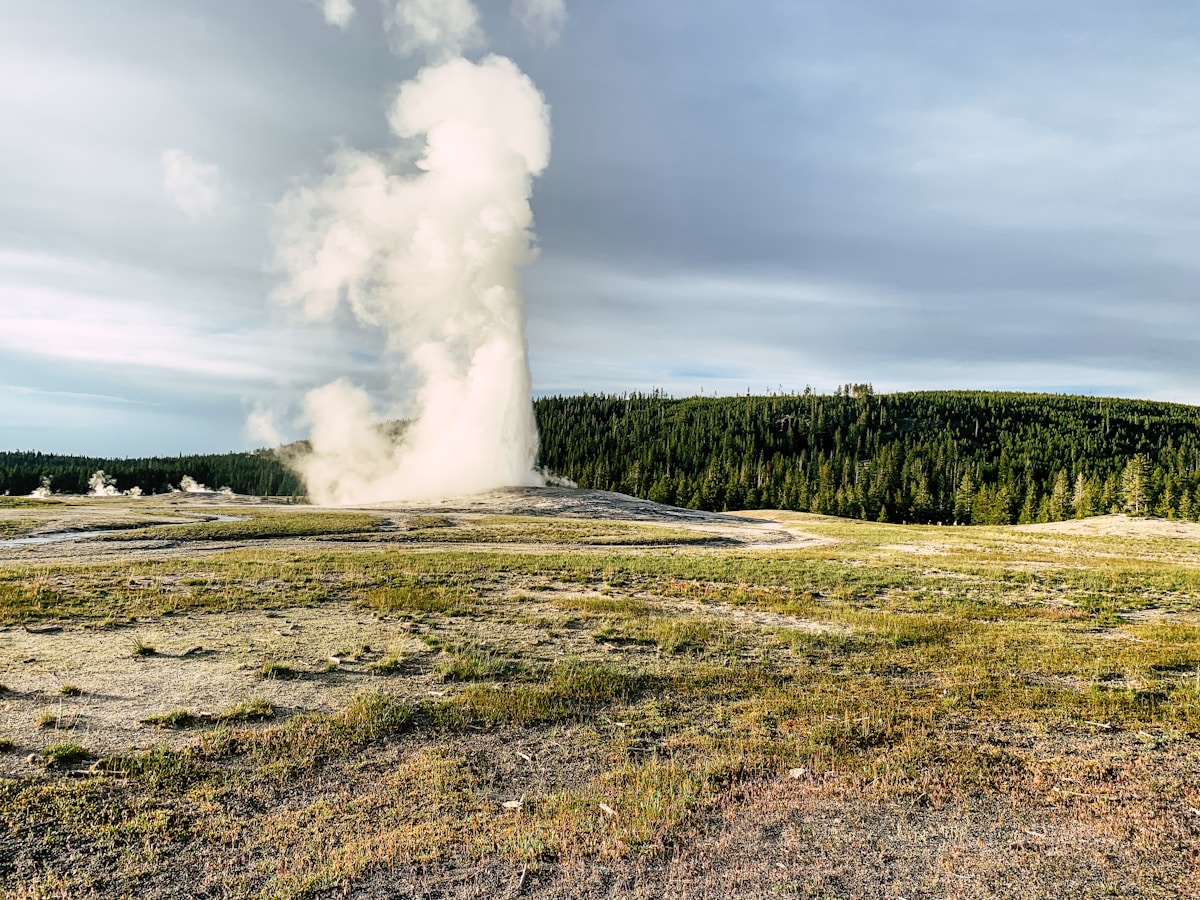
Old Faithful Geyser - Erupts approximately every 90 minutes (interval varies from 60 to 110 minutes; predicted times posted at the visitor center). Viewing is free with park entry. The Upper Geyser Basin boardwalk loop (1.3 miles, easy, 45 minutes) passes Castle, Grand, Riverside, and Morning Glory Pool geysers.
Grand Prismatic Spring - The largest hot spring in the US (370 feet wide). Best seen from the Fairy Falls Trail overlook: 5.4 miles round trip (easy, 2 hours) from the Fairy Falls Trailhead. The boardwalk below gives proximity but not the aerial perspective.
Lamar Valley - The “Serengeti of North America.” Drive the 29-mile Lamar Valley road at dawn or dusk for bison, pronghorn, wolves, and grizzlies. The Yellowstone Association runs guided wolf-watching expeditions from approximately $89/person.
Mammoth Hot Springs Terraces - Travertine terraces in constant change. The Upper and Lower Terrace boardwalk loops total approximately 1.75 miles (easy, 1–1.5 hours). Free entry. Located at the North Entrance.
Grand Canyon of the Yellowstone - Two major waterfalls (Upper Falls: 109 ft; Lower Falls: 308 ft) cut through yellow rhyolite canyon walls. The North and South Rim Drives access multiple overlooks. The Uncle Tom’s Trail descends 328 stairs to the base of Lower Falls (moderate, 0.5 miles round trip, 30 minutes).
Hayden Valley - Midway between Canyon and Fishing Bridge. Open meadow with bison herds numbering in the thousands in summer, plus grizzly bear activity. Best at dawn.
Norris Geyser Basin - The hottest and most dynamic thermal area in the park. Porcelain Basin loop (0.75 miles, easy, 30 minutes) covers dense geyser and hot spring activity. Steamboat Geyser here is the tallest active geyser in the world; eruptions are unpredictable.
Permits
Day hiking requires no permit beyond park entry.
Backcountry camping requires a backcountry permit, available in person (free) from any visitor center starting 48 hours before the first trip night, or in advance by mail ($3 fee as of 2026). Approximately 300 designated backcountry campsites. Reservations for advance permits open January 1 each year: nps.gov/yell/planyourvisit/backcountrypermits.htm.
Fishing requires a Yellowstone fishing permit: approximately $18 for three days or $40 for a season as of 2026. Available at visitor centers and ranger stations. State fishing licenses are not valid inside Yellowstone.
Campfire permits are required for backcountry fires where permitted (rare - most backcountry areas prohibit fires).
Accommodation
In-park lodges (all operated by Xanterra/Yellowstone National Park Lodges - book at yellowstonenationalparklodges.com):
- Old Faithful Inn - National Historic Landmark. Rooms from approximately $150/night (no en-suite); rooms with private bath from approximately $250/night. Open May–October.
- Canyon Lodge - Modern cabins and lodge rooms near the Grand Canyon of the Yellowstone. From approximately $190/night. Open June–October.
- Mammoth Hot Springs Hotel - Open year-round. Rooms from approximately $135/night; open in winter (one of only two year-round lodges).
- Lake Yellowstone Hotel - Elegant 1891 colonial building on Yellowstone Lake. Rooms from approximately $250/night. Open May–October.
Campgrounds (12 in the park): Operated by Xanterra (Bridge Bay, Canyon, Fishing Bridge RV, Grant Village, Madison) and NPS (others). Sites approximately $15–35/night. Reservations via recreation.gov for Xanterra sites; first-come-first-served for NPS sites.
Gateway towns:
- West Yellowstone, MT - Most hotels, widest choice, 0.5 miles from the West Entrance. Budget motels from approximately $90/night; mid-range hotels from approximately $160/night.
- Gardiner, MT - North Entrance; basic motels from approximately $100/night.
- Jackson, WY - South Entrance; higher-end base, boutique hotels from approximately $200/night.
Packing and Preparation
- Bear spray is mandatory for any backcountry hiking and strongly recommended on all trails. Purchase locally (approximately $40–55) - airlines do not allow it in luggage. Carry it accessible, not in your pack.
- Layers: Even summer mornings at 7,500-foot elevation can be near freezing. Afternoon thunderstorms are common July–August.
- Stay on boardwalks near thermal features - the crust over hot springs is thin and collapses without warning. Multiple fatalities have occurred from off-trail thermal encounters.
- Wildlife distances: 100 yards from bears and wolves; 25 yards from bison and all other wildlife. Bison injure more visitors annually than bears do.
- Binoculars or a spotting scope dramatically improve wildlife viewing in Lamar and Hayden Valleys.
- Download the NPS Yellowstone app for offline maps - cell service is patchy throughout the park.
- Fuel up outside the park; gas stations inside are limited and more expensive.
Allow a minimum of three days. One day covers the geothermal highlights; a second day covers the Grand Canyon and Lamar Valley; a third allows a backcountry hike or slower wildlife watching.
For guided ranger-led and private tours of Yellowstone, browse available tours and experiences. Most visitors reach national parks by car - compare car hire options in the USA for the best rates. Travel insurance is especially worth having for remote park trips where emergency evacuation can be costly.
Nearby & Related Guides
Frequently Asked Questions
- How much does it cost to enter Yellowstone National Park?
- Entry is approximately $35 per vehicle as of 2026, valid for seven days and covering all passengers. The America the Beautiful annual pass ($80) covers entry to all US national parks. A car is essential - there is no public bus service into Yellowstone and the road system covers 466 miles between major attractions.
- When is the best time to visit Yellowstone?
- June through early September is peak season with all roads and facilities open and frequent wildlife sightings. Late September and October offer significantly fewer visitors with elk rut activity and fall foliage. Winter (mid-December through March) is dramatically different - most roads close to vehicles, but snowcoach access and wolf viewing in Lamar Valley are exceptional.
- How far in advance should I book Yellowstone accommodation?
- Book in-park lodges 6–12 months ahead for summer visits. Old Faithful Inn, Lake Yellowstone Hotel, and Canyon Lodge all sell out well in advance. Campground reservations via recreation.gov for Xanterra-operated sites (Bridge Bay, Canyon, Madison) are also competitive. Gateway towns like West Yellowstone, MT, and Jackson, WY have more availability but should also be booked ahead.
- Is bear spray required in Yellowstone?
- Bear spray is mandatory for any backcountry hiking and strongly recommended on all trails. Yellowstone has one of the highest grizzly bear densities in the lower 48 states. Purchase locally (approximately $40–55) - airlines do not allow it in checked luggage. Bison actually injure more visitors annually than bears do; maintain at least 25 yards from bison and 100 yards from bears and wolves.
- How do I see wolves in Yellowstone?
- Drive the 29-mile Lamar Valley road at dawn or dusk with binoculars or a spotting scope - this area is called the 'Serengeti of North America' for its wildlife density. The Yellowstone Association runs guided wolf-watching expeditions from approximately $89/person. Winter (December–March) offers the highest wolf visibility as snow cover makes tracking easier.
Ready to explore?
Browse hundreds of tours and activities. Book securely with free cancellation on most options.
Browse on GetYourGuide →Best price guaranteed: same price as booking direct. We earn a small commission at no extra cost to you.