7 Days in the Pacific Northwest: Itinerary
Contents
- Car Rental and Driving Notes
- Budget Tiers
- Day 1: Portland
- Day 2: Columbia River Gorge (60 miles east of Portland, ~1 hour)
- Day 3: Mount Hood and Crater Lake Option
- Day 4: Mount Rainier National Park (90 miles from Portland, ~2 hours)
- Day 5: Mount Rainier to Seattle (70 miles from the park’s northwest entrance, ~1.5 hours)
- Day 6: Seattle
- Day 7: Olympic National Park (ferry from Seattle to Kingston ~30 min, then 60 miles to park entrance, ~2 hours total)
- What to Skip
- Booking Tips
The Pacific Northwest offers an unusually compressed set of landscapes — a major port city, one of the most biodiverse temperate rainforests on earth, multiple volcanoes, and a coastline running from Oregon to the Strait of Juan de Fuca. This 7-day loop starts and ends in Portland, moving north through Washington State with a return via the Olympic Peninsula.
Car Rental and Driving Notes
Rent in Portland and return in Portland. The loop covers approximately 900 miles. AWD or all-season tires are advisable in winter when mountain roads can be snowy or closed — check current conditions at wsdot.wa.gov (Washington) and tripcheck.com (Oregon).
Washington State has no state income tax but has higher fuel taxes than Oregon. Gas in the Portland area is generally cheaper than Seattle.
Budget Tiers
Budget: McMenamins Kennedy School (Portland, quirky hotel in a former elementary school) ~$130–$170/night. Green Tortoise Hostel Seattle ~$45–$70/night dorm. Olympic Peninsula Campgrounds ~$25–$35/night.
Mid-range: Ace Hotel Portland ~$180–$240/night. Edgewater Seattle (on Lake Union, not the bay) ~$250–$320/night. Lake Crescent Lodge Olympic NP ~$220–$280/night.
Luxury: Nines Hotel Portland ~$350–$480/night. Four Seasons Seattle ~$500–$700/night. Kalaloch Lodge Olympic NP (cliffs above the Pacific, very limited rooms) ~$280–$380/night.
Day 1: Portland
Portland’s food and coffee scene punches above its weight. Start in the Pearl District: Powell’s City of Books (Burnside and 10th, free, the largest independent bookshop in the world — genuinely). Breakfast at Tasty n Daughters (NW 23rd Avenue) — approximately $14–$22, known for their elaborate egg dishes.
Afternoon: Washington Park holds the International Rose Test Garden (free, 7,000 rose plants) and the Portland Japanese Garden (approximately $20 as of 2026, one of the finest Japanese gardens outside Japan). The aerial tram to OHSU runs approximately $5.80 round trip and has a good city view.
Evening: Dinner in NE Portland’s Alberta Arts District. Podnah’s Pit (NE Alberta) for Texas-style BBQ — approximately $16–$28 per plate. Or head to the Mississippi Avenue area for more options.
Day 2: Columbia River Gorge (60 miles east of Portland, ~1 hour)
Drive I-84 east along the Columbia River. The Historic Columbia River Highway (US-30) parallels I-84 with better scenery — take it from Troutdale to Ainsworth State Park.
Multnomah Falls: The second-tallest year-round waterfall in the US at 620 feet. Free to view from the base; the 1.1-mile trail to the bridge above the lower falls is also free. A shuttle from Portland to the falls runs seasonally (approximately $8 round trip) — self-drive parking requires a timed pass in peak season (approximately $2, booked at recreation.gov).
Crown Point Vista House: A 1918 rotunda on a 733-foot basalt promontory — free. The views of the Columbia River Gorge are among the best on the entire route.
Afternoon: Continue east to Hood River — a windsurfing and kitesurfing town at the confluence of the Hood River and the Columbia. Good lunch options along Oak Street. The Hood River Waterfront Park is worth a stop. Return to Portland by evening, or continue to Mount Hood.
Day 3: Mount Hood and Crater Lake Option
Mount Hood (60 miles from Portland, ~1.5 hours): Timberline Lodge (approximately $200–$350/night) is a WPA-era stone lodge at 6,000 feet on Mount Hood’s southern flank, open year-round. The exterior was used for the exterior shots of the Overlook Hotel in The Shining. Day skiing runs from November–July (Palmer Glacier allows summer skiing). The hike from Timberline Lodge up to the Zigzag Canyon Overlook takes approximately 2.5 hours round trip.
Drive north through Portland on I-5 toward Washington for the rest of the route. If you have only 7 days, skip the southern Oregon extension. If you have a 10-day trip, the detour south to Crater Lake National Park is worth the distance — the 6-mile rim trail around the deepest lake in the US (approximately 1,943 feet) is spectacular.
Sleep near Mount Rainier (proceed north on I-5) or in Tacoma.
Day 4: Mount Rainier National Park (90 miles from Portland, ~2 hours)
Mount Rainier is a 14,411-foot active stratovolcano and one of the most glaciated peaks in the contiguous United States. The park entrance costs approximately $35/vehicle as of 2026, valid 7 days.
Paradise Visitor Center (5,400 feet): The main hub. Henry M. Jackson Memorial Visitor Center has exhibits on the geology and ecology. The Skyline Trail loop (5.5 miles from Paradise) gives glacier views and in July–August passes through meadows of wildflowers. The trail climbs to Panorama Point at 6,800 feet for a close view of the Nisqually Glacier.
Sunrise (6,400 feet, open July–September only): The highest point accessible by road in the park. The Sourdough Ridge Trail from Sunrise gives a different angle on the mountain and on the Emmons Glacier (the largest glacier in the contiguous 48 states by area). Allow 2 hours from Paradise to drive around to Sunrise.
Sleep inside the park at Paradise Inn (approximately $200–$280/night, book months ahead) or in Ashford or Packwood at the park’s western entrance.
Day 5: Mount Rainier to Seattle (70 miles from the park’s northwest entrance, ~1.5 hours)
Drive out via Nisqually entrance and north on I-5 or WA-7 to Seattle. Check in, leave the car at the hotel, and spend the afternoon on foot.
Pike Place Market: The working farmers’ and fishmongers’ market on Pike Street and First Avenue above the waterfront. Free to walk through. The original Starbucks is at 1912 Pike Place — expect a 20–30 minute queue in peak season. The Gum Wall below the market (Post Alley) is disgusting and worth seeing.
Evening: Capitol Hill is Seattle’s most food-dense neighborhood. Sitka & Spruce (Melrose Market) for Pacific Northwest ingredients — approximately $28–$48 for mains. Or Stateside (East Pike Street) for French-Vietnamese fusion at approximately $24–$38.
Day 6: Seattle
Morning: The Seattle Art Museum on First Avenue (approximately $32 as of 2026) has a strong Northwest Coast Indigenous art collection and rotating contemporary exhibitions. Free on first Thursdays.
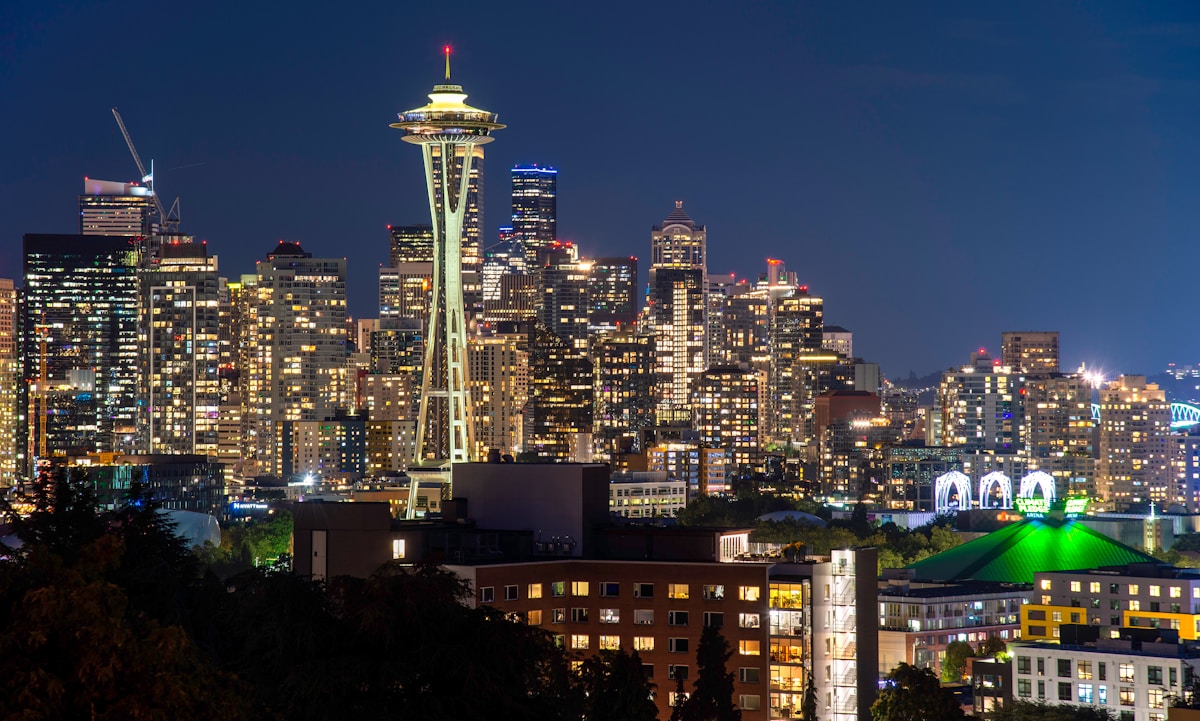
The Seattle Center (15 minutes on the monorail from Westlake Center, approximately $3.50) contains the Space Needle (approximately $36 to go up as of 2026), the Museum of Pop Culture (MoPOP, approximately $32), and Chihuly Garden and Glass (approximately $32). The three-attraction combo runs approximately $75.
Afternoon: Drive or ferry to Bainbridge Island (Washington State Ferries from Colman Dock, approximately $8.85 each way as of 2026, 35-minute crossing). Walk from the ferry dock into Winslow town — several good coffee shops and the Bainbridge Island Museum of Art (free). Return on the 5pm or 6pm ferry for views of the Seattle skyline on approach.
Evening: Dinner in Belltown or on Capitol Hill. The Walrus and the Carpenter (Ballard neighborhood) is one of the best oyster bars in the country — raw bar items approximately $3–$5 each, reserve ahead.
Day 7: Olympic National Park (ferry from Seattle to Kingston ~30 min, then 60 miles to park entrance, ~2 hours total)
Take the morning ferry from Seattle to Kingston (approximately $14.70 as of 2026) and drive west across the Kitsap and Olympic Peninsulas. This avoids the I-5/I-90 traffic through Tacoma.
Hoh Rainforest: One of the few temperate rainforests in the world — approximately 140 inches of rain per year. The Hall of Mosses (0.8-mile loop) is a National Recreation Trail through old-growth Sitka spruce and maple trees draped in club moss. The Hoh Visitor Center has good exhibits. Park entrance approximately $35/vehicle as of 2026.
Hurricane Ridge (17 miles from Port Angeles): A paved road climbing to 5,242 feet with views of the Olympic Mountains and, in clear weather, Vancouver Island across the Strait of Juan de Fuca. The Hurricane Ridge Visitor Center has exhibits. Deer and black-tailed deer graze in the meadows directly around the visitor center.
Return to Portland: Drive south on US-101 from Port Angeles to the Hood Canal Bridge (approximately $6.50 eastbound toll), then south on WA-3 and I-5 back to Portland — approximately 3.5 hours.
Alternatively, return the car in Seattle if flying out of Sea-Tac.
What to Skip
Seattle’s tourist waterfront (Pier 57, the ferris wheel): Overpriced and generic. The ferry to Bainbridge Island gives a better waterfront experience and actually goes somewhere.
Mount St. Helens on this route: The 1980 eruption site is impressive but adds 4+ hours of driving south from Portland. Worth a dedicated trip, not a day add-on.
Snoqualmie Falls near North Bend: Popular but takes 1.5 hours round trip from Seattle for a 4-minute experience. Skip unless you have a half-day spare.
Booking Tips
- Paradise Inn, Mount Rainier: opens mid-May and books out by January for peak summer weekends. Book at mtrainierguestservices.com immediately after your travel dates are set.
- Lake Crescent Lodge, Olympic NP: similarly limited rooms, book months ahead.
- Washington State Ferries: no reservation needed for walk-ons; vehicle reservations recommended for the Bainbridge and Kingston routes on summer weekends (wsdot.wa.gov/ferries).
- Multnomah Falls: timed entry passes required May–September, free at recreation.gov. Book the morning of or days ahead.
- July–September is the optimal season: mountain parks are snow-free above 5,000 feet, rain is minimal, and wildflowers are at peak in August. June can still have snow at Paradise and Hurricane Ridge.
Book an experience
Itinerary in the area
Instant confirmation · Free cancellation on most bookings